
What if there was a place that was curated for all your messy, imperfect, human-ness?
Personal memories and social media content serve completely different purposes
PRIVATE SHARING
2/11/20262 min read
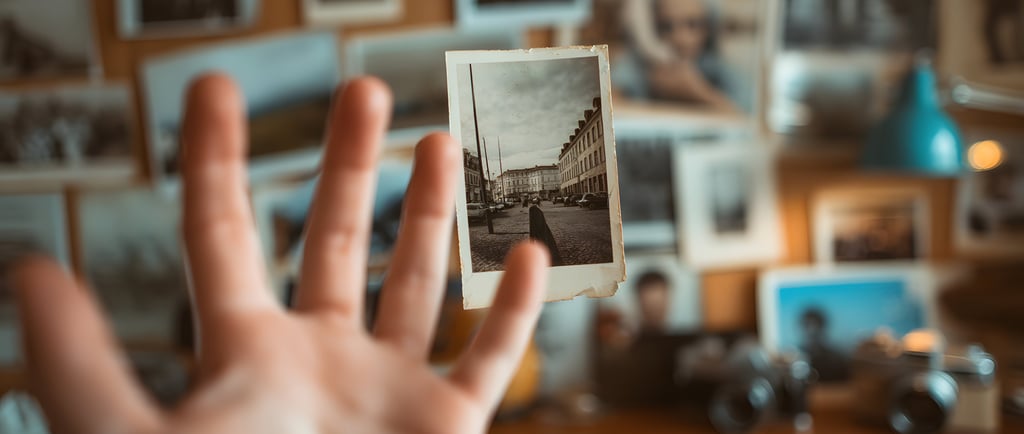
Personal memories and social media content serve completely different purposes - memories are records of lived experience meant for personal reflection, sharing with the people who were present in those experiences, and being able to keep those memories alive in a place that honors them and their emotional significance.
Social media content on the other hand, is material created for audience consumption, engagement and reach, public performance, and social visibility. Social platforms are built for content and sales, not memories that are near and dear to us. This creates a fundamental mismatch that distorts how we share and preserve our lives.
But what if we put the “human” first? The messy, imperfect, under-represented parts of our beautiful human experience that never make it to the public platform for fear of judgement and being cast out of the group. Your memories deserve something that feels more personal, slow, meaningful and that matches the very nature of what it means to be a human being in a chaotic and over-perfected world. A place that makes documenting, storing, organising and finding the moments that matter, easy, fun, and friction-free. Plus - somewhere that really values the safety and privacy of the moment, that makes you feel safe to share all of who you are, with the people you love.
When likes, comments, shares, and views are built into the system, they create a feedback loop that alters your behavior. You start choosing photos based on how well they'll perform rather than what actually matters to you. You frame experiences for audience consumption instead of personal meaning. The anticipation of metrics influences what you capture and share in the first place. Engagement becomes a proxy for your own self-worth. This isn't a character flaw, it's an inevitable consequence of the way these platforms are designed. When you build a system around performance indicators, people optimize for those indicators. It's just how humans work.
Social platforms optimize for recency, where new content constantly replaces old in feeds. They reward volume because frequent posting maintains visibility. Features like Stories are explicitly short and disappear almost instantly. Whereas your memories need something that is far more personal, private and peaceful. A place where content remains accessible long-term, organised easily by topic, event, or person rather than chronology. Intentional retrieval when you want to find specific memories, controlled visibility for sharing with relevant people instead of broadcasting to random audiences. These are architectural incompatibilities, not gaps that can be fixed with new features. This is about a fundamental difference in the needs you have and how a platform can serve them.
Using public social media as a place to store your personal memories is like using a megaphone for a private conversation. Social platforms are highly effective at what they're built for: public broadcasting, network building, content virality, and engagement optimization. These are real, valuable purposes. But personal memories are a different category that require different architectural decisions: private access, organized collections, controlled visibility, and freedom from performance and posturing.
Private sharing platforms like Swizil remove the focus on performance and comparison completely, giving you a completely different relationship to photo sharing, connecting and creating. Not better; different. Swizil is purpose-built for a different need that social media was never designed to address. Built entirely for you, and the things that you hold closest to your heart.
© 2025 Swizil. All rights reserved.


Contacts
Address
Silverstream House, Fitzroy Street
London, UK
It's your world, have fun with it.